Tip: move over the painting to use the lens.
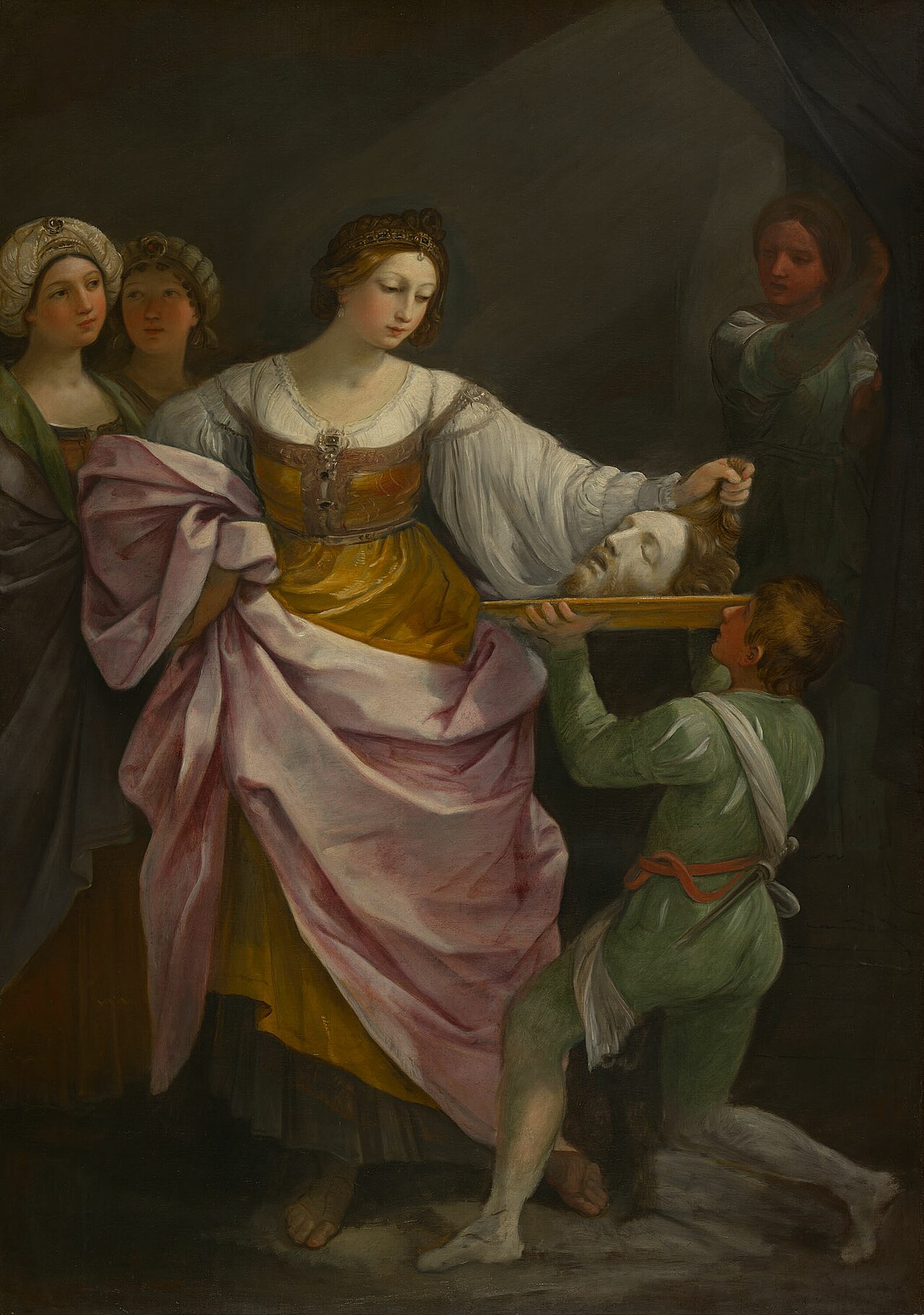
Salome with the Head of Saint John the Baptist
Guido Reni · c. 1639–42
- Artist
- Guido Reni (Italian, 1575–1642)
- Date
- c. 1639–42
- Medium
- Oil on canvas
- Size
- 248.5 × 174 cm (97 3/4 × 68 1/2 in.); Framed: 285 × 210.2 × 8.9 cm (112 3/16 × 82 3/4 × 3 1/2 in.)
- Made in
- Italy
- Style
- Renaissance
- Where to see it
- Art Institute of Chicago
Louise B. and Frank H. Woods Purchase Fund · CC0 Public Domain · Art Institute of Chicago · image via Wikimedia Commons · see it at the museum ↗
Notes from the museum
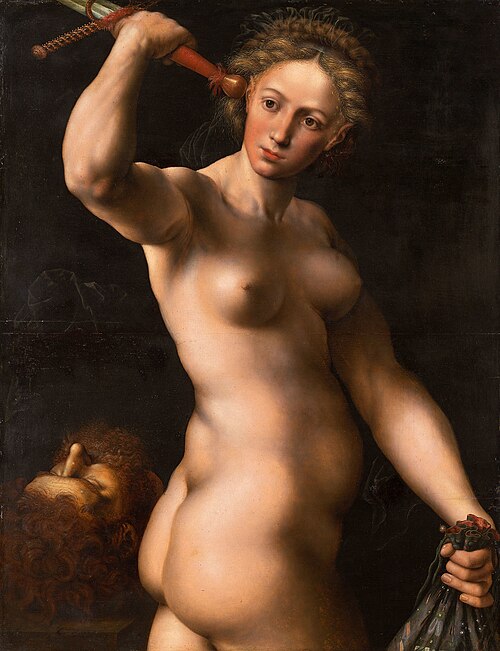
This painting depicts Salome as she receives the head of John the Baptist on a platter, the gruesome reward she chose for having pleased her stepfather, Herod, by performing a seductive dance. This episode from the New Testament had long been popular in Italian art, thanks to its combination of religiosity, violence, and eroticism. The most famous and successful Italian painter of his day, Guido Reni worked in Rome and then in Bologna, where his highly refined style and intensely spiritual subjects dominated. Despite its horrific subject matter, this unfinished work displays the graceful movement, delicate colors, and transparent paint application of Reni’s late style.
Text: Art Institute of Chicago (open access). Our full story for this work is coming soon.
Slow Look
- The whole picture Let your eyes wander. Where do they want to rest?
- The light Find the brightest spot. What is it showing you?
- The edges Look at what is half cut off at the borders.
- One small detail Choose one tiny thing and stay with it for a while.
- The whole picture again Step back. Has it changed for you?
About Guido Reni
Guido Reni was an Italian Baroque painter, although his works showed a classical manner, similar to Simon Vouet, Nicolas Poussin, and Philippe de Champaigne. He painted primarily religious works, but also mythological and allegorical subjects. Active in Rome, Naples, and his native Bologna, he became the dominant figure in the Bolognese School that emerged under the influence of the Carracci.
What do you see?
Stand in front of it for a moment. Then tell us what you noticed or felt - there are no wrong answers.
Be the first to share a thought.
If you like this, stand in front of these