Tip: move over the painting to use the lens.
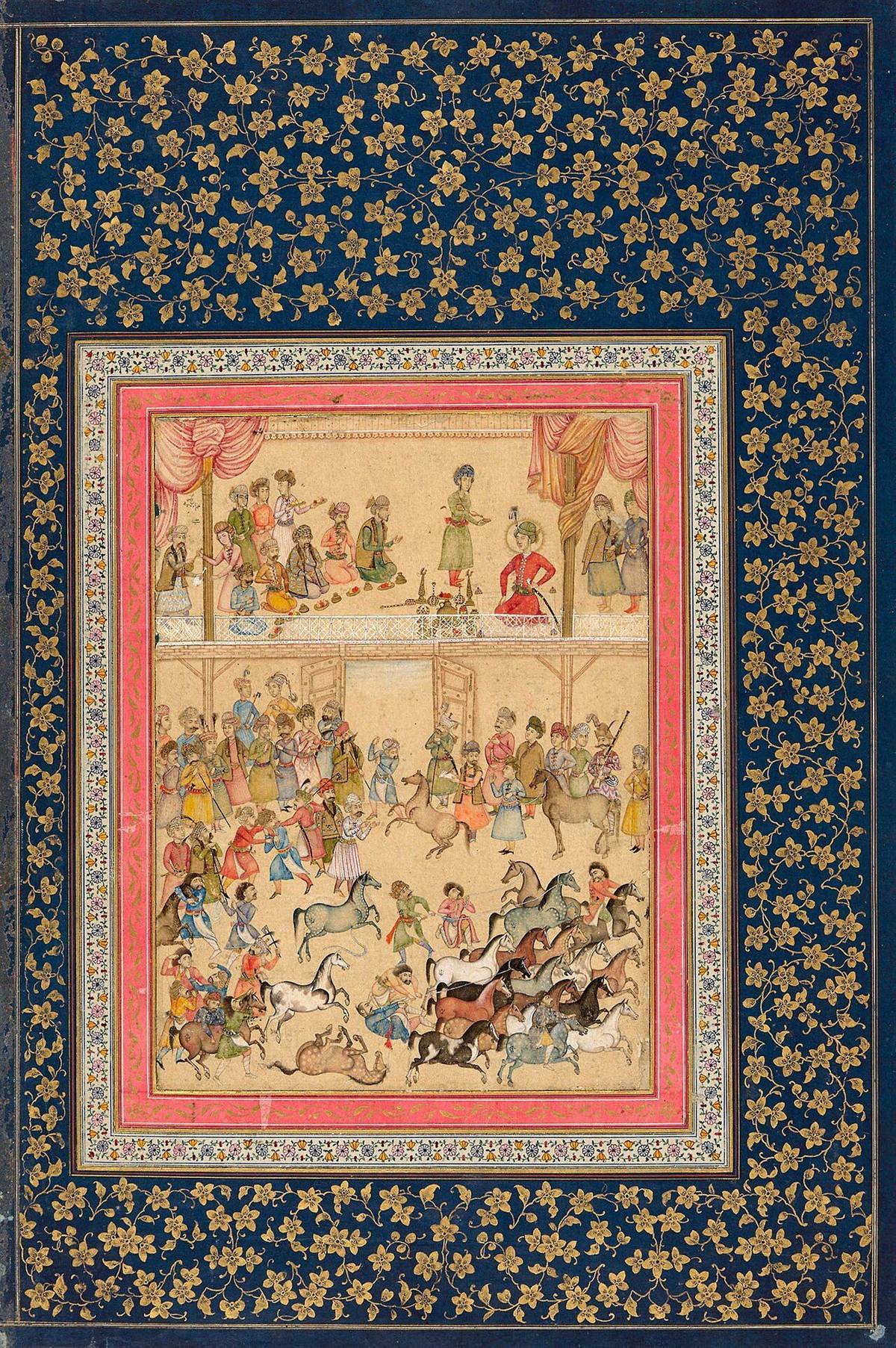
Royal Horse Inspection
'Aliquli Jabbadar · Safavid dynasty (1501–1722), late 17th century
- Artist
- Iran, probably Isfahan Aliquli Jabbadar
- Date
- Safavid dynasty (1501–1722), late 17th century
- Medium
- Opaque watercolor and gold on paper
- Size
- Page: 46.8 × 31.1 cm, Painting: 23.1 × 17 cm (Page: 18 1/2 × 12 1/4 in., Painting: 9 1/8 × 6 11/16 in.)
- Made in
- Iran
- Style
- safavid
- Where to see it
- Art Institute of Chicago
Lucy Maud Buckingham Collection · CC0 Public Domain · Art Institute of Chicago · image via Wikimedia Commons · see it at the museum ↗
Notes from the museum
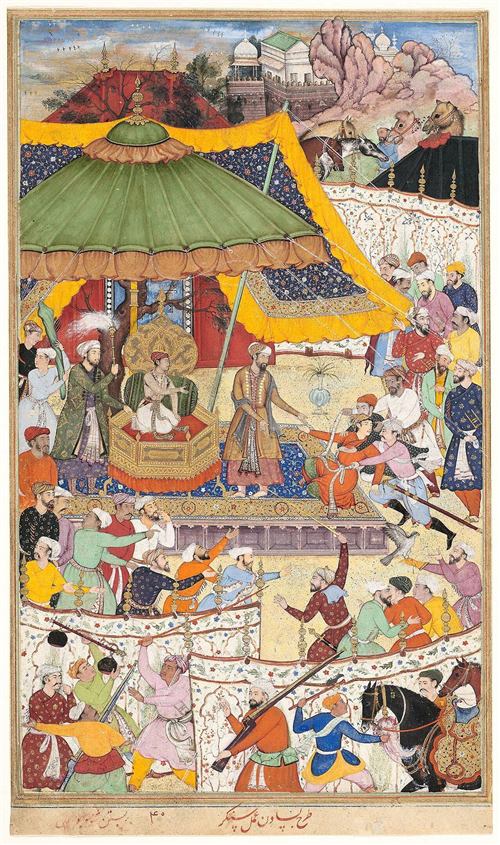
This painting shows the royal stables in Isfahan. In the upper half of the work, the Persian king, or shah (sitting next to the column on the right), has gathered on a platform with five kneeling courtiers and various attendants serving fruit and wine. The king is identified in the artist’s signature at the upper left as Shah ‘Abbas II, who died in 1666, before this painting was executed. The ruler’s status is emphasized by his golden halo and by the opulent gold and jeweled vessels placed before him. The lower portion of the painting depicts a roundup of horses who bear the trident-like royal brand on their flanks; they move in a spiral that coils counterclockwise from the upper right. The scene bursts with energy and looks chaotic—a brawl is taking place at the lower left —but the courtiers and handlers seem to be regaining control of the animals. The figures on the platform, meanwhile, pay no attention to the commotion below. The painting represents a journalistic or even anecdotal approach to Persian painting that was introduced in the second half of the seventeenth century. The viewer gets the sense that the work may record a specific moment in daily life at court and that it was observed firsthand. Figures no longer conform to stock types but are highly individualized by facial features and dress. Standing just to the right of center in the upper part of the roundup scene
Text: Art Institute of Chicago (open access). Our full story for this work is coming soon.
Slow Look
- The whole picture Let your eyes wander. Where do they want to rest?
- The light Find the brightest spot. What is it showing you?
- The edges Look at what is half cut off at the borders.
- One small detail Choose one tiny thing and stay with it for a while.
- The whole picture again Step back. Has it changed for you?
What do you see?
Stand in front of it for a moment. Then tell us what you noticed or felt - there are no wrong answers.
Be the first to share a thought.
If you like this, stand in front of these